
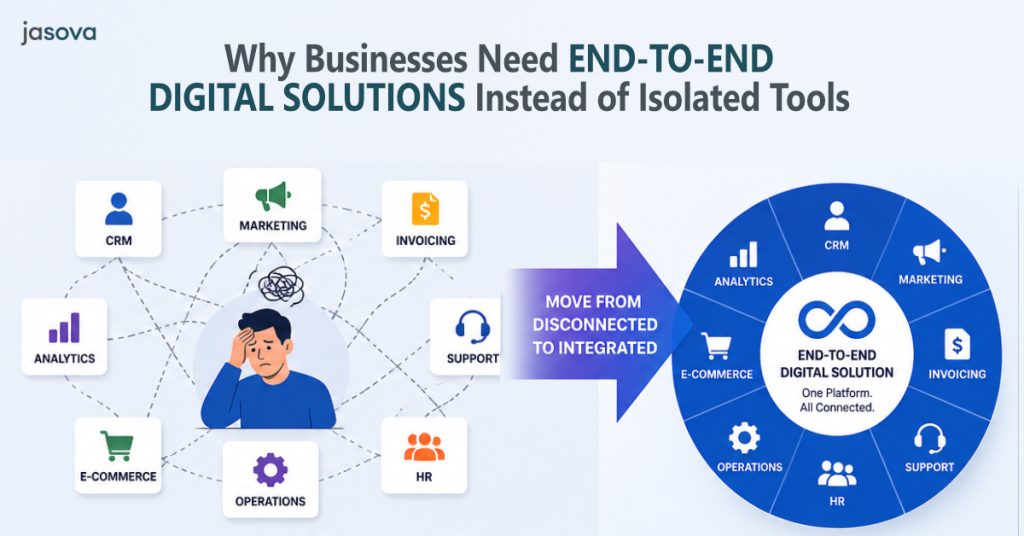
Many businesses use different tools for different tasks such as customer management, billing, marketing, inventory, and communication. While these tools may solve individual problems, they often operate separately and do not share information with each other.
As businesses grow, isolated tools can create inefficiencies, data duplication, communication gaps, and poor customer experience. This is why organizations increasingly prefer complete digital ecosystems instead of disconnected systems.
Businesses looking for better efficiency often invest in digital technology solution in Bangalore services that combine multiple processes into one streamlined platform.
This blog explains why end-to-end digital solutions are more effective than isolated tools and how they support long-term business growth.
What Are End-to-End Digital Solutions?
End-to-end digital solutions are integrated systems that manage multiple business functions within a single connected environment.
These solutions may combine:
- Customer relationship management
- Sales and marketing tools
- Billing and invoicing
- Inventory management
- Customer support
- Reporting and analytics
Instead of using multiple unrelated tools, businesses can manage operations from one platform.
Problems with Isolated Tools
Using different tools for different business activities may seem convenient at first, but it often creates challenges over time.
Common problems include:
- Duplicate data entry
- Poor communication between departments
- Increased risk of errors
- Difficulty generating accurate reports
- Higher software and maintenance costs
When tools are not connected, employees spend more time switching between systems and less time focusing on productive work.
Benefits of End-to-End Digital Solutions
1. Better Efficiency
Integrated systems automate workflows and reduce manual effort. Employees can access all necessary information from one platform, saving time and improving productivity.
2. Improved Data Accuracy
When all departments use the same system, data remains consistent and up to date. This reduces duplication and errors.
3. Stronger Customer Experience
Customers expect fast responses and smooth interactions. End-to-end solutions help businesses deliver better service because customer information is available in one place.
4. Easier Reporting and Decision-Making
Integrated systems provide real-time reports and insights. Business leaders can make better decisions based on accurate data.
5. Lower Long-Term Costs
Although end-to-end solutions may require higher initial investment, they often reduce long-term costs by minimizing software subscriptions, maintenance, and inefficiencies.
How Digital Integration Supports Business Growth
As businesses expand, they need systems that can grow with them. Isolated tools often struggle to support increasing data, users, and operational complexity.
Integrated digital systems help businesses:
- Scale operations more easily
- Improve collaboration between teams
- Increase operational transparency
- Adapt to changing market demands
Businesses that use connected systems are often more agile and competitive.
Role of Marketing in End-to-End Solutions
Marketing is an important part of any digital ecosystem. When marketing tools are integrated with customer data, businesses can create more targeted and effective campaigns.
For example:
- CRM systems can connect with email campaigns
- Customer behavior can guide advertising strategies
- Website data can support lead generation efforts
Many companies partner with Jasova digital marketing agency in Bangalore to align marketing tools with sales, customer service, and analytics platforms.
Businesses looking for the best digital marketing services in Bangalore often prefer agencies that provide integrated solutions instead of isolated marketing activities.
Why Businesses Should Move Beyond Isolated Tools
Businesses that continue using disconnected tools often face slow operations, poor communication, and difficulty scaling. In contrast, end-to-end digital solutions improve efficiency, customer experience, and overall business performance.
Modern businesses need technology that works together—not separate systems that create more complexity.
Conclusion
End-to-end digital solutions help businesses streamline operations, improve collaboration, and reduce long-term costs. Unlike isolated tools, integrated systems create a connected business environment that supports growth and better decision-making.
Businesses that invest in complete digital ecosystems are better prepared for future challenges and opportunities.